

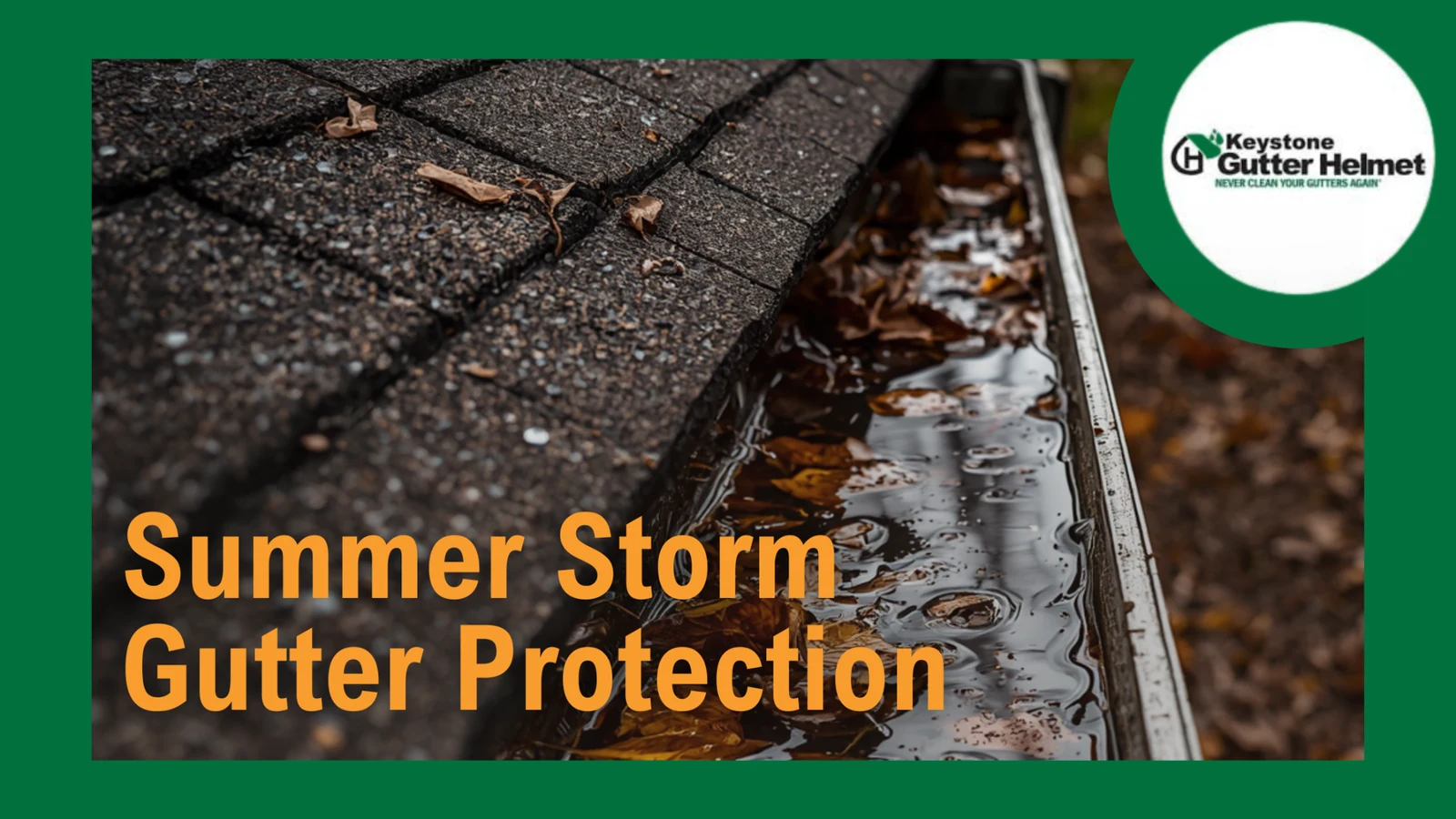


Summer Storms Are Stressing Your Gutters. Here’s What to Do Before Fall Arrives.
Pennsylvania summers don’t go easy on homes. July brings heavy rain, fast-moving storms, and humidity that lingers long after the clouds pass. If your gutters are full of debris, every one of those storms is sending water where it shouldn’t go — down your siding, pooling at your foundation, soaking into the landscaping you spent money on.
For homeowners looking for gutter protection in Reading, PA and across Berks County, summer isn’t a slow season for gutter problems. It’s when those problems show up.
Here’s what you need to know — and why acting now, before fall, is the smarter move.
What Summer Does to Gutters
Most people think of fall as gutter season. That’s when the leaves come down and the cleanings get scheduled. But summer creates its own set of problems, and they’re often less visible than a pile of leaves.
Debris builds up faster than you expect
Maple seeds (the little helicopter pods), cottonwood fluff, seed casings from nearby trees, pollen, and accumulated grime from spring all collect in gutters through June and July. By the time you notice an overflow, there’s often a solid mat of compacted organic material sitting inside the channel — material that doesn’t rinse out in a light rain and holds moisture even when it’s dry.
Summer storms test gutters at capacity
A heavy thunderstorm with bursts of rainwater can back up gutters faster than they can be drained. As the water finds the path of least resistance, it runs behind the fascia board or pours over the side in sheets, creating even more problems for your home’s roof and siding.
Heat related stress
Aluminum gutters expand and contract significantly across the 60°F+ temperature swings common in Pennsylvania summers. This can loosen hangers, stress seams, and cause sag over time — especially on longer continuous runs.
Pests take advantage too
Standing water and damp organic debris in a gutter is exactly the kind of environment that attracts mosquitoes and birds looking for nesting material. If your gutter has been lucky enough to avoid filling up with standing water, you still have another pest that may take advantage of the dry cavities left within piles of debris, such as wasps and carpenter ants. Once pests establish themselves in a gutter system, removing them is a separate project on top of whatever gutter cleaning you were already avoiding.
The subsequent damages that occur
Water that doesn’t drain properly ends up somewhere — usually several places at once. Fascia boards and soffit rot from sustained moisture exposure, often without any visible sign until the damage is significant. Landscape beds erode when concentrated water flow carves channels through them. Soil around the foundation stays saturated, which puts pressure on foundation walls and creates conditions for basement water intrusion. None of these repairs is cheap, and the frustrating part is that most of them are entirely preventable.
Why Gutter Cleaning Isn’t the Solution

Cleaning gutters is a temporary fix. You clean them in spring, and by July they’re accumulating debris again. You clean them in fall, and they’re full again by December. The cycle continues indefinitely because the design of an open gutter is the problem — not how often you address it.
Beyond the repetition, there’s the cost. Professional gutter cleaning runs $100–$300 per visit for most homes, and that’s assuming the crew finds nothing that needs repair. Do it twice a year and you’re spending $200–$600 annually, year after year, with no endpoint.
Then there’s the ladder problem. Every time someone climbs up to clean gutters — homeowner or hired crew — there’s risk involved. Falls from ladders are among the most common causes of serious residential injury. Even if nothing goes wrong, it’s a task most homeowners actively avoid, which means it gets pushed back until something fails.
The fundamental issue isn’t how often you clean your gutters. It’s that your gutters are open to the sky.
How Gutter Helmet Solves the Problem Permanently

Gutter Helmet is the original gutter protection system — the product that defined the category and has been the industry’s most-installed gutter guard for over 40 years. Keystone Gutter Helmet is an authorized dealer and installer serving Reading, Berks County, Lehigh County, and surrounding areas in eastern Pennsylvania.
The system works through surface tension. A solid panel with a patented nose-forward design installs over your existing gutters. Rainwater follows the curved surface around the nose and drains through a 3/8″ horizontal slit into the gutter below. Leaves, needles, seeds, and debris hit the panel and slide off to the ground — never getting into the gutter at all.
The panel design
Gutter Helmet’s patented metal texturing and horizontal-rib design provides maximum strength while minimizing weight and stress on the gutter. The PermaLife coating — a Kynar-based finish — resists UV exposure and acid rain without fading for 20 years. This is a commercial-grade coating used in architectural applications because of its long-term durability. The product looks the same in year 15 as it did on installation day.
The bracket system
Not every home is the same, and the Gutter Helmet installation system accounts for that. A range of reinforced, heavy-gauge brackets are available for different conditions — including brackets engineered to support gutters under heavy snowfall, anchor-lock brackets designed to prevent birds and animals from accessing the gutter system, and fascia-mounted options for homes with expensive slate, shake, or metal roofing that shouldn’t be touched during installation. The “one-size-fits-all” approach common to cheaper products doesn’t apply here.
Roofing manufacturer approval
Both the Gutter Helmet product and the installation methods used by Keystone have been evaluated and approved by major roofing manufacturers. Your roof warranty is safe. This matters — some gutter covers require fasteners that penetrate roofing material and can void manufacturer warranties. Gutter Helmet avoids this.
Eight colors plus solid copper
The system is designed to integrate with your home’s roofline, not stick out from it. Color options include choices to match most common shingle types, so the finished installation is nearly invisible from the street.
Read more about how the system works and what makes Gutter Helmet different.
Why Summer Is Actually the Best Time to Install
Most homeowners think about gutter protection in the fall when the leaves start coming down. That instinct makes sense, but it means you’re reacting to the problem instead of preventing it.
Installing Gutter Helmet in July means you’re protected before the heaviest debris season arrives. Fall in Pennsylvania is peak season for gutter blockages — oak, maple, and sycamore leaves come down fast, and pine needles accumulate through late summer and early fall. If your system is installed before September, you go into that season covered rather than hoping to get a cleaning scheduled in time.
Your summer storms are also covered from day one. The protection starts working immediately after installation, which means the heavy rain events that hit Berks and Lehigh counties through July and August are no longer a concern.
Scheduling tends to be easier in summer too. Fall is one of the busiest seasons for home improvement contractors of all kinds. A July installation typically means shorter lead times and more flexibility around your schedule.
Pennsylvania winters add another layer of consideration. Freeze-thaw cycles and heavy snow create ice dam conditions that can force water under shingles and into the home. If you want to address winter gutter performance as well, consider pairing Gutter Helmet with Helmet Heat — a low-voltage de-icing system that keeps gutters draining during extended freezing temperatures. Installing both in summer means your gutters are ready for every season.
What to Expect from a Keystone Gutter Helmet Installation
The process is straightforward. Once you schedule a free estimate, a Keystone Gutter Helmet installer comes to your home, looks at your existing gutters and roofline, and walks you through what the installation involves. You get a clear picture of cost and process before any commitment.
On installation day, the crew cleans your gutters first, then inspects them and adjusts alignment where needed. Gutter Helmet installs over your existing gutter system in most cases — no full gutter replacement required. Fasteners, sealant, and brackets are all part of the installation. Before the crew leaves, they inspect the finished system to confirm it’s properly seated and performing correctly.
Most installations are completed in a single day. The exact timeline depends on home size and roofline complexity, but Keystone Gutter Helmet will give you a realistic timeframe during your estimate.

Serving Reading and Eastern Pennsylvania
Keystone Gutter Helmet is based in Reading and installs Gutter Helmet systems throughout eastern Pennsylvania. The service area covers Berks County, Lehigh County, Northampton County, Schuylkill County, and surrounding communities — from Allentown and Bethlehem to Wyomissing, Boyertown, Emmaus, Tamaqua, Nazareth, Sinking Spring, and dozens of towns in between.
If you’re in eastern Pennsylvania and tired of the gutter cleaning cycle, we’d be glad to take a look at your home.
Get a Free Estimate Before Fall
There’s no cost to find out whether Gutter Helmet is the right fit for your home. Keystone Gutter Helmet provides free estimates throughout the service area. A brief visit, a look at your gutters and roofline, and a clear conversation about what the installation would involve and what it would cost.
Contact Keystone Gutter Helmet to schedule your free estimate, or call 610-372-4383. We’re available Monday through Friday, 8 a.m. to 4 p.m., and Saturday from 8 a.m. to noon.
Stop planning your next gutter cleaning. Never Clean Your Gutters Again!