

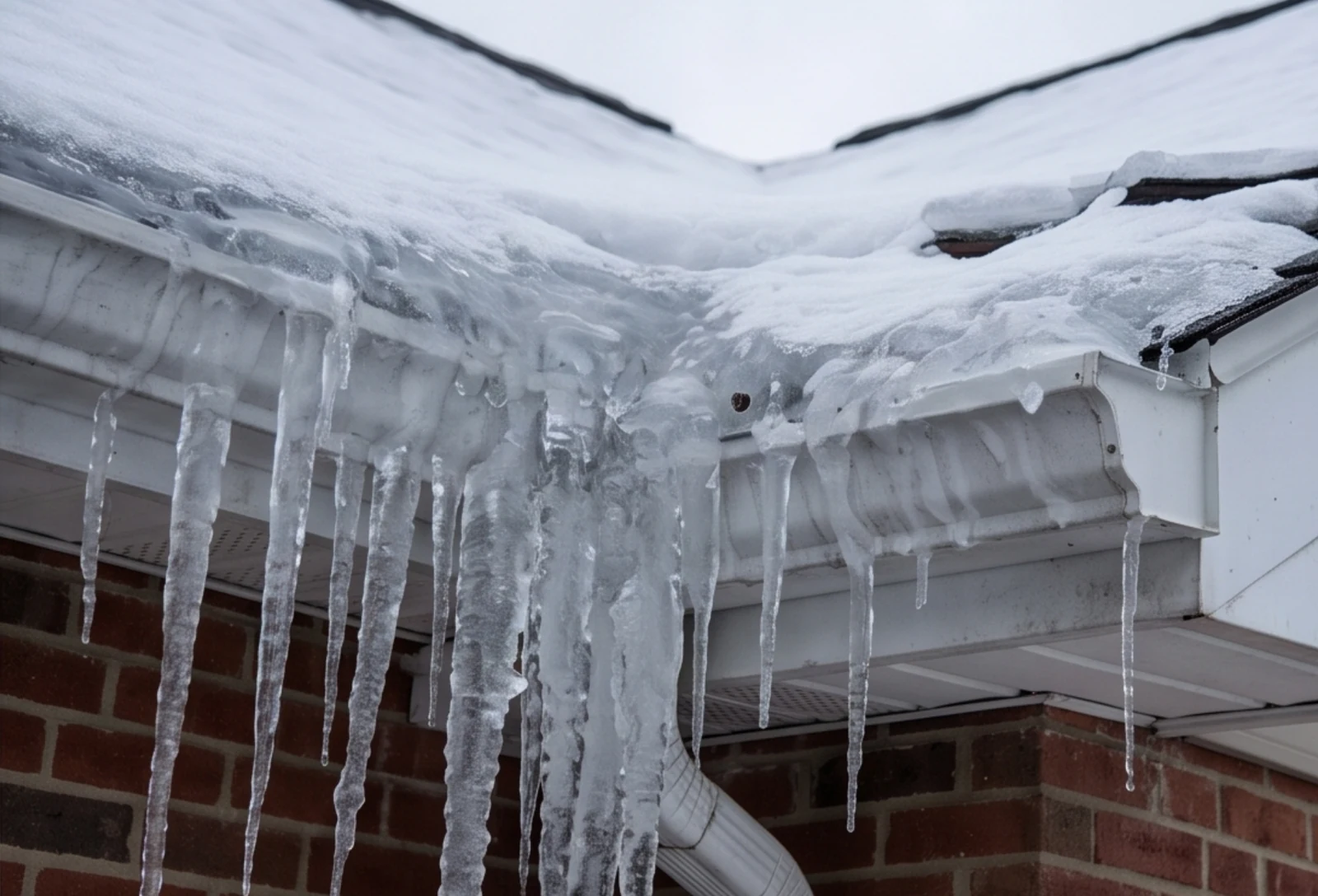
Winter protection
Helmet Heat de-icing
An ice dam doesn’t announce itself. It builds quietly at the cold edge of the roof until meltwater backs up under the shingles — and the first sign most homeowners get is a stain on the ceiling.
Heat exactly where winter attacks
Targets the freeze points
A self-regulating heating cable runs along the eaves and gutter line — precisely where dams form, and nowhere they don’t.
Pairs with Gutter Helmet
Designed to work alongside your Gutter Helmet system, not against it — covered gutters drain, heated edges keep draining in a freeze.
Installed right
A 120/240v system fitted with a licensed electrician. This is roofline infrastructure, not a plug-in gadget.
What winter stops costing you
✓ Ice dams greatly reduced at the eaves and gutter line
✓ Gutters keep draining through freeze-thaw cycles
✓ Helps prevent meltwater backup under shingles
✓ Less icicle buildup over walkways and doors
✓ Sized and routed to your specific roofline
Same roof, one winter apart
What the roof edge looks like afterward

Left, the same roofline packed with ice and icicles. Right, after Helmet Heat was installed along the edge. Results vary with roof design, insulation and how hard the winter runs.
Questions homeowners ask
Does it run all winter?
The cable is self-regulating — it draws more power where the line is cold and throttles back where it isn’t, rather than heating the whole roof edge at full blast all season.
Does it prevent ice dams entirely?
No system honestly claims that. Helmet Heat greatly reduces ice dams by keeping the melt path open where they form; severe conditions can still produce some ice.
Do I need Gutter Helmet first?
No, but they’re designed to work together — Gutter Helmet keeps debris from damming the gutter, Helmet Heat keeps the freeze from doing it.
Who installs it?
Keystone’s crew fits the cable to your roofline; the electrical connection is made with a licensed electrician, because it’s a 120/240v system.
Serving Berks, Lehigh, Northampton and Schuylkill counties — see every area →
Get ahead of winter.
Estimates are free, and fall is the right time to schedule.